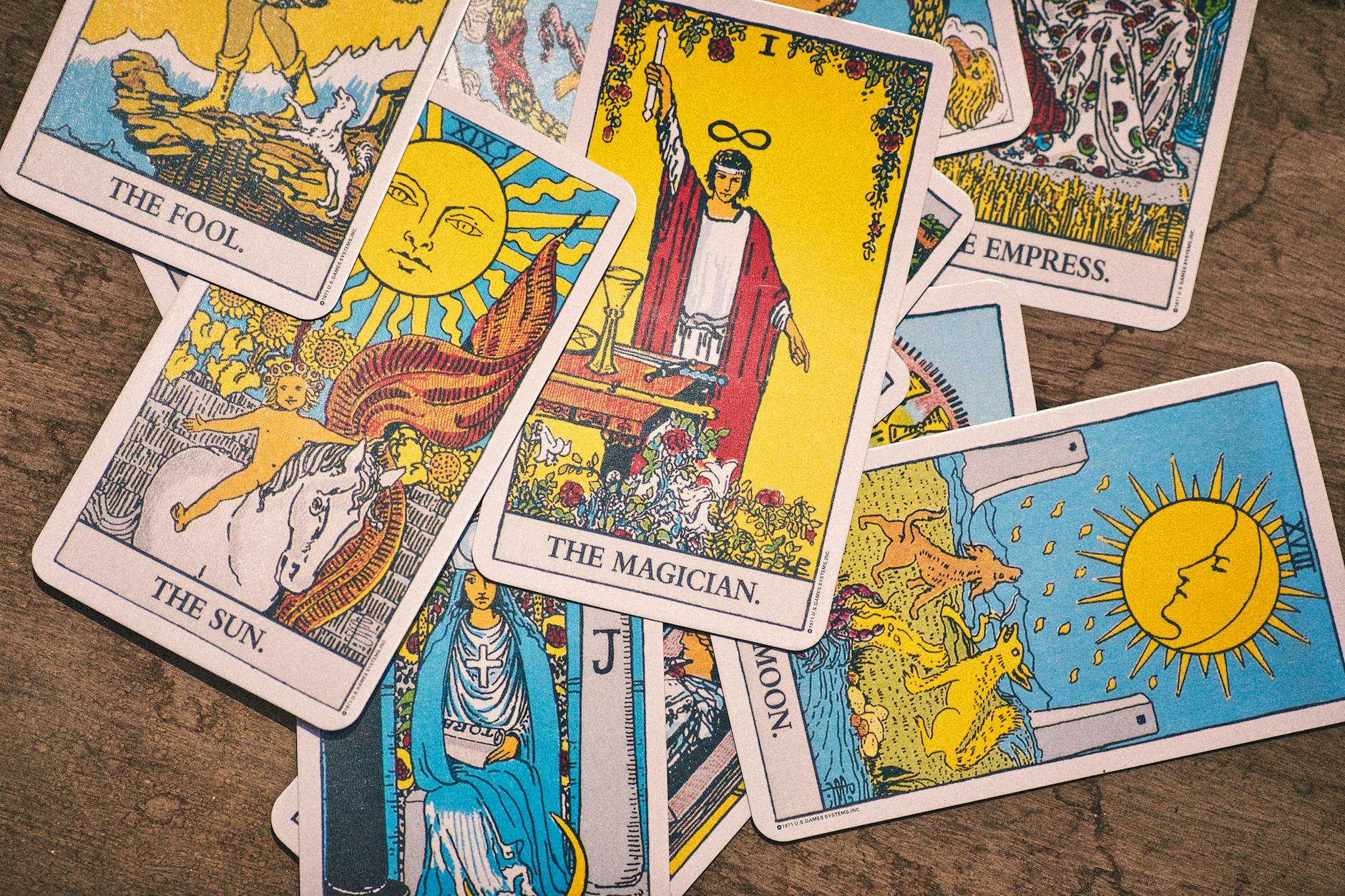
Alongside my lifelong fascination with astrology, tarot was one of my earliest discoveries when I started exploring my spiritual side, eventually leading to me walking down the Pagan path. I found a box containing a mini deck on one of those little carousel displays at Barnes & Noble many years ago and have been fascinated with it ever since.
There are literally thousands of books, websites, and podcasts that delve into this mystical tool, so, as expected, there are endless amounts of sources that can help the layperson interpret the tarot. Tarot has particularly piqued my interest, and I have read plenty of books, studied with some great teachers, and I read the cards for myself and others FOR FUN. Analyzing the symbolism depicted on these cards has truly struck a chord with me over the years. Therefore, when I will write about topics in tarot, its to not only share the basics, but also to dive into certain areas that may not get too much attention.
DISCLAIMER: I am not a licensed, certified tarot practitioner by any means, so I am not qualified to do readings for profit, nor do I plan to do so. All information that I am sharing with you is done for entertainment, informational and educational purposes only. I will provide some great points of reference on this website for those of you who wish to explore even further, including professional tarot readers I have studied with, websites that I frequent, and books you may wish to peek at.
I plan to post a more intensive look into the 78 cards in a tarot deck at some point, but for now, here’s a quick crash course!
- The first 22 cards that comprise the Major Arcana represent archetypes, virtues, and a few celestial bodies (such as The Sun, Temperance, The High Priestess). As the name suggests, the Major Arcana showcases major life lessons that come out front and center. The 56 cards that make up the Minor Arcana delve into the commonplace/day to day dealings. They are not as forceful or as prevalent as the Majors, but they still have a great deal of significance and meaning.
- The Minor Arcana is quite similar to playing cards. They are usually numbered from ace to ten, divided into four suits, and are assigned to a specific element. Wands (also listed as Rods, Staffs, Batons, and Staves) are traditionally ruled by the element of Fire, signifying physical and creative energy and action, passion, and sometimes battle and strife. Cups (also listed as Chalices or Goblets) are ruled by the element of Water, signifying emotion, and sometimes love and romance. Swords are ruled by Air, governing logic, rationale, analysis, and thought. Pentacles (also listed as Coins, Disks, and Plates) are ruled by Earth, covering material goods, wealth/finances, health, and the tangible.
- Court cards (Kings, Queens, Knights, and Pages) within a suit usually signify a very prominent, influential person in one’s life, and can often be oneself. There’s a King of Wands, Cups, etc., a Queen of Wands, Cups, etc. and the rest. As with playing cards, they have a bit of a hierarchy. The court cards represent someone within a specific demographic, as well as their attributes. Pages are usually children or teenagers, so they signify someone or something with a youthful spirit or appearance or something new to learn or experience. Knights are young-to-mid-life adults, so this signifies something or someone seasoned or experienced. Queens and Kings are pretty self-explanatory, and they usually have that regal quality, wealth of power and a high status.
 Eklektiki Mageia